Showing posts sorted by date for query fig. Sort by relevance Show all posts

Fig leaf - Ficus carica - shape, venation, margin, texture

 Fig leaves are probably most famous for the biblical mention of Adam and Eve covering themselves with these leaves after they sinned.  Personally I can´t imagine anyone wearing these rather rough and sandpaper textured leaves.  Or perhaps the first couple covered themselves with the leaves of another member of the ficus family.  These fig leaves come from the Edible Fig - Ficus carica.  As can be seen from the images Fig leaves are very deeply "lobed".  The edible fig does drop it leaves each year.  The image below is of the autumn colors.
 The following image shows the bright green color of the fig leaf as well as its lumpy surface.  What is not see easy to see from the image is its rough, sandpaper like texture on the top side.
 The image below is of the reverse (underside) of the leaf, which is a lighter green color and is also rough but with stiff pubescent hairs.  It is also very "rugose" with the veins being very visible and pronounced.
 The venation of the fig leaf is "reticulate" with the secondary veins forming a network pattern. Each of the lobes also has a main vein that branches of from the rachis.
 The margin is "serrate" with rounded teeth that point slightly forward.
Summary...
Shape: Lobate
Margin: Serrate
Consistency: thick and stiff
Venation: Reticulate
Texture top side: Rugose
Texture reverse: Pubescent
Color: bright green, yellow-orange in autumn
Petiole: 2-6cm

One fig growing out from inside another

 I came across a fig tree with a bumper "breva" (first crop) crop of figs.  As I was taking some pictures I noticed several figs where on fig was growing out from the inside of another fig forming a sort of double fig.  The images speak for themselves.

Prickly Pear or Barbary Fig - a tree like cactus

 The Prickly Pear or Barbary Fig is a tree like cactus that is widely grown for its edible "tuna" fruits in semi-arid regions around the world.  The images in this post come from central Spain in the Extremadura region.
 The tasty yet somewhat seedy fruits of this tree-cactus are a bit of a challenge to pick since both the leaves and fruits are covered with both pointy, thorny spikes and small, fine prickly "hairs".  If you don´t what to get a hand full of these bothersome barbs you had better come prepared.  A thick set of gloves with wrist protectors is one way to go about picking them.  Then comes the challenge of riding the fruit of their thorns and hairs.  One way to go about it is to place several dozen in a gunny sack, get them wet and then agitate the sack for 5-10 minutes.  This can be done by hanging the sack from a branch or bean and then rocking the sack back and forth with your hand.  In this way the fruits end of cleaning each others prickles off.
 To eat the fruit one has to first peel back the skin.  One way that I like to do this is to slice off both ends, make a cut down one side and then peel the rest off starting from the cut and removing the rest of the peel in one piece leaving the tasty interior ready to be eaten as is.

First Fruits of the Fig Tree - Breva crop

 The Common Fig (Ficus Carica) tree produces two crops of figs each year.  The first crop, which grows on the previous years shoot growth is called the "breva" crop (from the Spanish term) or the "First Fruits" crop.  In Italian these first figs are called "Fioroni".  These first fruits of the fig tree are larger than the normal figs and often present with a different color.  They are also less sweet and a bit dryer.  They are however prized for their size which can approach that of a medium sized pear.  "Brevas" are usually harvested between June and July while the main crop is harvested in August and September.  The main crop of figs grows in the current years shoot growth.

It is not uncommon to see the main crop of figs growing while the Breva figs are ripe for harvest.  In the top image of this post you can see how the Breva fig is growing from the previous years branch growth and the newer main crop is growing on the new branch shoot.

New Poll about the world´s most valued tree species

I have posted a new poll in the right column about the world´s most valued tree species. In this new poll I left out some of the options from the previous poll and more importantly I added two new options that should have been included in the first poll. In case anyone is interested the initial results of the previous poll had the Olive tree with a slight lead over the rest and then a close tie between four other trees; Apple, Coffee, Oak and Cedar of Lebanon.

In this new poll I have included these five tree species and then added the Sacred fig/bodhi and the Maidenhair tree (Ginkgo biloba).

I have based the selection of these seven trees on their historical popularity as well as their current popularity as illustrated by how much information there is about them on the internet. It stands to reason that the more information there is about any given tree on the internet the more highly valued it is by the general public. Take into consideration that my evaluation has been done in the English language and that in other languages there may be differences in which are the most valued trees. In fact I believe that the two tree species that I have added to this new poll are in fact much more valued in Asia then there are in other parts of the globe.

So, the seven options for this poll are...

Sacred Fig-Bodhi (Ficus religiosa)

Maidenhair (Ginkgo biloba)

Apple tree (Malus domestica)

Coffee tree (Caffea arabica)

Olive tree (Olea europaea)

Oak tree (Quercus robur)

Cedar of Lebanon (Cedrus libani)


What to you think is the most valued tree species in the world all factors included? Give us your opinion? -->

The Importance of Trees

There are many ways in which trees can be valuable to us and to the environment as a whole. Here are a few of them...
  • Trees provide food for us to eat. There are species of trees that provide fruit, nuts, starch, Olive oil etc.
  • Trees provide sweets for us to eat as well. Chocolate comes from the Cocoa tree. Maple syrup is from the Sugar maple tree.
  • Trees are used to make juices such as Apple, Orange, Lemon etc.
  • Trees are used to make hot drinks. Coffee and Cocoa trees are the most well known but others such as the Linden are used for herbal teas.
  • Trees provide spices to flavor our food and drinks with such as Cinnamon or Cloves.
  • Trees are used to make fragrances. Mahogany is used as a base note in a good number of perfumes. Bay leaf or Cypress are used in the middle notes while trees such as Eucalyptus or Lemon are used in the top notes.
  • Trees are the source of essential oils. Sweet Orange, Cedarwood or Blue Gum are sources of important essential oils.
  • Trees are the source of medicines. A few medicinal trees are the Benjamin, Camphor or Rauwolfia.
  • Trees are used in toothpaste. Natural XYLITOL from Birch trees is used in Squigle toothpaste.
  • Paper is made from trees. The pulp that paper is made from comes mostly from softwood trees such as Poplar, Pine, Larch etc. With this would be included cardboard, carton, etc.
  • Trees are also the source of rubber. Although the Ficus Elastica is called the rubber tree most rubber is made from the sap (called Latex) of the Para Rubber tree (Hevea brasiliensis).
  • Trees are used to make soap. Olive, Argan, Coconut, Cocoa and Brazilnut oil are all used to make hand soaps. One of the earliest trees used in the making of soap was the Cassia tree.
  • Trees are also used in cosmetics make things such as exfoliators, lotions or toners.
  • Trees are used in tattooing. Henna from Lawsonia inermis has been used for body art for thousands of years.
  • Trees are used in aromatherapy. The Bergamot orange (Citrus aurantium ssp. bergamia) or Lemon scented gum (Corymbia citriodora) trees are fine examples.
  • Trees are used to make musical instruments. One of the secrets of the violin resides in the wood it is made of. Spruce and Maple are two of the key woods.
  • Trees are used to make tools. Many different hardwoods such as Oak are used to make axe and spade handles.
  • Trees are used for firewood and cooking charcoal. The harder the wood the longer and hotter it burns. Holm oak is a great example.
  • Trees are used to make homes and shelters for people and animals. Wherever trees are readily available they have been used to make homes and shelters. In the northwest United States Western Redcedar or Ponderosa Pine are used as timber for construction.
  • Trees are used to make liquor. In Spain the acorns of Oak trees are used to make Acorn liquor.
  • Trees are used to make clothing. In primitive tribal societies in Papua New Guinea the bark of several tree species was pounded into a thin semi-flexible cloth and made into skits and capes. Large leaves are also used to cover certain body parts by tucking the leaves into a belt.
  • Baskets can be made from trees. One example is small baskets made from pine needles.
  • Trees are used to make furniture. Pine and Fir wood is favored by the Northern Europeans while Oak, Beech or Walnut is used in countries such as Germany and Switzerland.
  • Trees are an important source of shade. Some Ficus species provide an almost total blockage of the sunlight while others such as the Persian Lilac or Blue Jacaranda provide a more pleasant shade.
  • Trees are used to make rafts, canoes and other small boats. Birch bark was used by native Americans on their canoes. The bark was stretched over a wood frame that was sometimes made of cedar.
  • Trees are used in hunting. Yew trees have long been used for making hunting bows. Trees have also been used bow hunters who stand in elevated platforms to wait for their prey to pass. Young trees have also been used to make traps.
  • Trees are used to make fences. Apart from fence post in Europe some tree species such as Holm oak or Ash are planted long fence lines to support and form part of the fence as living fence posts.
  • Trees are used to as ornamental trees to beautify gardens, avenues and parks. The London plane is the arch-typical urban tree while trees such as the common cypress have been used to make tree "sculptures".
  • Trees are important because they clean the air we breath. Many people don´t realize that the substance that trees are mostly made of (the carbon) comes not from the ground but from the air. Trees convert CO2 into oxygen that we need to breath.
  • Trees stabilize hillsides and keep top soil from being washed away.
  • Trees scrub carbon from the air and help store it.
  • Trees help keep river courses from eroding into banks.
  • Trees provide food and shelter to many species of birds and animals.
  • Trees have important roles in many religious belief systems. Buddha is associated with the Sacred Fig tree.
  • Trees are important national, state and local symbols. The Oak of Guernica is a very important symbol for the Basque people for example.
  • Trees are historical landmarks.
  • Trees stabilize the environment.
  • Trees are used to make paper for books, magazines and newspapers.
  • Trees are used to make artifacts and carvings. Carvings of masks, figurines, animals, idols, etc are common in most native cultures.
  • Trees are used to make shoes. In Northern Europe wooden shoes called "Clogs" are made from Willow, Poplar, Birch, Beech and Alderwood.
  • Trees have been used to make airplanes. The famous "Spruce Goose" giant airplane that is now on display at the Evergreen Aviation and Space museum in Oregon is made almost entirely of wood.
  • The ground shells of the Black Walnut tree are used as a polishing abrasive and as an additive in well-drilling mud.
  • There are trees that improve soil quality and can be used as natural crop boosters two examples are Cajanus cajan or Gliricidia sepium.
Submit your vote for the world´s most valued tree species at the top of the right column.

Atocha Botanical Garden - Madrid Spain

The interior of the old part of the "Atocha" Madrid central train station is now an indoor botanical garden. This indoor tropical jungle was inaugurated in 1992 and covers an area of 4,000 square meters. There are about 7,000 plants from 260 different species in the garden as well as a pond with Goldfish and turtles. I first visited this garden in the Spring of 1994.

The garden is located where the old train landings used to be. There are paths that criss cross the garden and several cafes around the sides. Most of the plants are tropical species and a good number of them are palms. Some of these palms are so tall that they reach almost to the roof of the domed building. The image below is of the "Travelers Palm" that is native to Madagascar. In most outdoor settings this pseudo palms leaves tend to shred like a Banana tree but in this indoor garden the leaves are all intact and much more impressive.

The image below is of the Queen Sago (Cycas circinalis) which is similar to the King Sago Palm (Cycas revoluta).
In the swamp like pond at one end of the garden there are several Baldcypress trees (image below) as well as several Malabar Chestnuts.
Some other tree species in the garden include the Blue Jacaranda, the Fiddle Leaf Fig, the White Bird of Paradise, and the Rubber tree.
The Atocha train station is still the main central train station for the city of Madrid with access to the local Metro, the suburb light-rail "Renfe Cercanias", regional trains, national "Talgo" trains and the "Ave" bullet trains that go to Barcelona, Sevilla, Cordoba, Malaga and Toledo.

How to take care of Ficus Benjamina plants

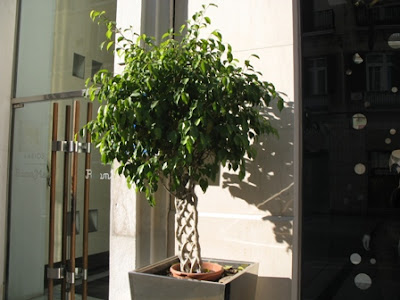
The Benjamin Fig (Ficus Benjamina) is one of the most common tree species that is used as an indoor potted plant. Although it is very well suited to be used in indoor settings the fact that it is a tree requires that it cared for following a few simple tips.

#One - Make sure that your Ficus plant is getting the right amount of sunlight. Ample light is necessary and some direct light for part of the day is fine but avoid a location that exposes to plant to direct sunlight for too long. Also keep in mind that these plants are very sensitive to changes. It is not uncommon for a Benjamin Fig to drop all of its leaves in response to a dramatic change. The trick is to find a good location and then don't move it!
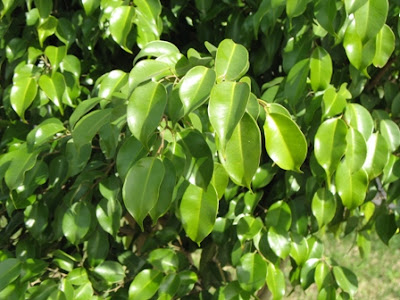
#Two - Take care of your plant' s roots. The two main things you need to worry about are root rot and becoming root bound. To avoid root rot it is a good idea to not let you plant sit in standing water. If you over water and allow the plant to sit in a tray with the excess water root rot may develop which in turn will cause the leaves to start spotting and falling off. Water the plant only when the soil is almost dry, make sure the moisture gets to the roots but don't allow the excess water to collect at the base of the plant. In between these waterings you can also keep the plant happy by misting it every few days or so. To avoid the plant becoming root bound it will be necessary to trip back the roots every 3-5 years and possibly change up to a larger pot.

# Three - Keep your plant well fed. It is generally recommended to fertilize a Benjamin Fig monthly during the months that the plant is growing with a basic fertilizer diluted to at least half strength. It is important to feed your plant but it may be equally important to not overfeed it as well.

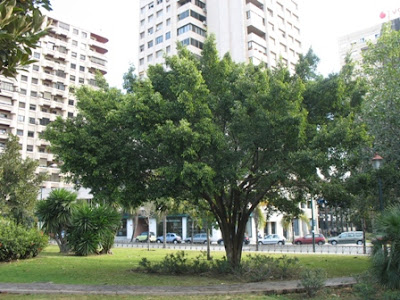
And remember, your plant is in fact a tree and is trying to become like the one below, so to keep it small and cute in an indoor setting you need to take care of it!


see also...
Fiddle Leaf Fig care tips
Money tree plants

Indoor Fiddle Leaf Fig care tips

The Fiddle Leaf Fig tree is commonly used as an indoor potted plant. It is relatively easy to care for, has large beautiful leaves and has a slow rate of growth. In this post I will list seven tips for caring for this tree species in an indoor environment as well as links to sites with more information.

Tip #One
Make sure your plant has right amount of light. Abundant but not direct light is recommended. Too little light will cause the plant to loose leaves and thin out. It also tends to grow towards the light giving the impression that it is leaning. Rotate the plant every so often to keep it growing straight and to ensure bushiness.

Tip #Two
Don´t over water the plant. The Fiddle leaf fig does well with short dry periods between waterings. The frequency of watering depends on the amount of light the plant gets. One good way to determine how often you should water is to let the pot dry out until the new growth at the top begins to wilt slightly. Calculate the time that elapsed from the last watering and subtract a day or two to determine the ideal frequency of watering. This way you will be watering the plant just before it starts to wilt the next time.
Read more at...
http://www.farmlifenursery.com/Web%20pages/Lyrata%20care.htm

Tip #Three
Prune to encourage branching and bushiness. The Fiddle leaf fig tends to grow a tall single stem when indoors. This long stem will normally not be able to keep itself upright and will require some sort of support. To encourage a more "tree like" form prune the plant at a desirable hight while the plant is still fairly young. It is recommended to do this in early spring before the new growth forms.
Read more at...
http://www.marketblooms.com/plantcare/pdf/FiddleLeafFig.pdf


Tip #Four
Be careful not to expose the plant to dry heat or drafts. Like other Ficus tree plants the Fiddle leaf fig has a tendency to drop its leaves when exposed to too much dry heat or drafts and go into a sort of dormant recovery mode for a period of time. Some figs such as the Sacred Fig will do this as part of their normal growth cycle just prior to the growth of new leaves.

Tip # Five
Clean the dust of the leaves once in a while to allow the plant to absorb as much light as possible. Often in indoor settings a layer of dust builds up on the leaves without our being aware of it and reduces the effective light that the plant gets. Every so often gently clean the leaves of with a soft cloth. Don´t try to do this with your hands as rubbing the leaves can damage them slightly and cause them to bleed little drops of white milky sap. Use latex gloves if you are allergic to this plant.

Tip #Six
Move your plant to an outdoor setting during the summer so that it can get more light. If you do this however transition it back indoors gradually at the end of the summer to avoid shocking the plant.

Tip #Seven
Trim the roots every year or two. The Fiddle Leaf Fig is a tree capable of growing to 40-50 feet tall with a normal root system for a tree that size. When roots grow in a small container they have little room to grow in and end up wrapping around the base of the container or growing out the bottom of the pot. Trimming the root system back during the dormant season will help keep the plant growth slow and will help maintain healthy roots.

http://forums2.gardenweb.com/forums/load/houseplt/msg0718401415535.html

http://plantcareguru.com/plant_care/fiddle_leaf_fig.php


Over the years I have focused on taking pictures of trees and focusing on the interesting details and facts about trees.  My two son's have grown up watchin their dad take pictures of trees and often going along on hikes to find some new tree.  Now my oldest son has taken an active interest in photography and has created his own website.  Manuel Livingstone Photogrpahy.

The Greatest Trees in the World

This is a list of the 12 most magnificent and famous tree species in the world and their greatest specimens. I have also posted an expanded version of this post on my Ten Thousand Trees Blog that has pictures of each tree.

Largest tree by Volume - Giant Sequoia
Tallest tree - Coastal Redwood
Largest Spread - Bengal FigOldest Individual tree - Bristlecone Pine
  • Methuselah tree
  • Pinus longaeva
  • age 4,840 years
  • (the Jomon Sugi tree has been reported to be older (7,200 years) but more conservative estimates date it at 2,200 years old)
Largest Girth - Montezuma Cypress
  • Árbol del Tule (Oaxaca, Mexico)
  • Taxodium mucronatum
  • 11.62 meters in diameter
  • circumference of 36.2 m
Greatest Baobab - Adansonia digitata
  • Sunland Baobab
  • Adansonia digitata
  • circumference of 46,8m (a Baobab´s girth expands and contracts depending on how much water it is holding . . . it is assumed that this measurement reflects the girth at its point of greatest expansion)
  • runner-up - Chapman´s Baobab
Tallest Flowering Tree - Mountain Ash
  • Icarus Dream (Andromeda, Tasmania)
  • Eucalyptus regnans
  • Height 97 metres (318 feet)
  • Alternate tree - Trident Tree (96.5 meters)
Largest and oldest clonal colony - Quacking Aspen
  • Pando tree (Utah, USA)
  • Populus tremuloides
  • 107 acres (43 hectares) and approx 47,000 stems
  • (Clonal colonies are groupings of "trees" (in reality stems) that are all part of a single living organism)
Most Revered tree - Sacred Fig (Bo, Bodhi, Pipal)
  • Sri Maha Bodhi (Anuradhapura, Sri Lanka)
  • Ficus religiosa
  • Propagated from the Bodhi tree
  • A descendant of the tree under which Buddha is thought to have received his enlightenment.
Most Resistant tree - Mesquite
  • The Tree of Life (Bahrain)
  • Located out in the desert 1.2 miles (two kilometers) from the Jebel Dukhan
  • Source of water unknown
Most Important in History - Cedar of Lebanon
  • Cedars of Lebanon
  • Cedrus libani
  • Mentioned in many ancient texts such as the Bible and the Koran
  • Important to many ancient civilizations such as the Babylonians, Egyptians, Hebrews, Arabs etc.
Greatest "Living Fossil" tree - Dragon tree
More trees of renown...
Garden of Gethsemane Olive trees
Fortingall Yew
Tane Mahuta
Te Matua Ngahere
Angel Oak Tree
Grandidier's Baobab
Giant Java Willow
Meiji Shrine Wishing tree
Alishan Sacred Tree II - Taiwan
900 year old Pine tree in Italy
Tree climbed by one million people!

Council tree - Ficus Altissima

The Council tree (Ficus Altissima) is a large leaf "fig" that is sometimes used as an indoor potted tree species. It is not nearly as common however as its close relatives the Rubber tree, the Fiddle Leaf Fig, the Ficus Benjamina, the Sacred Fig or the Edible Fig. The leaves of the Council tree are quite large measuring about 10-12 inches in length and 5-6 inches in width. They have a simple elliptical shape and pronounced pinnate veins that have about an eighth inch relief on the reverse side and are alternate.
The "Fig" of the council tree is almost as large as a normal edible fig but with a more rounded, oblong shape. The fruit color ranges from yellow to orange to almost red and they present a series of "spots" as you can see in the image below. These figs measure about 1-1.3 inches in length. I cut one of the figs open to get a picture of the inner detail. It was quite a bit harder and more difficult to cut than an edible fig but the smell was similar. I do not know whether these figs are edible or not and while tempted I refrained from giving one a bite.
The light grey bark was similar to some other "Banyan trees" but I did not see any evidence of "prop-roots" although the tree here photographed may have been too young still to have this feature. These trees have been planted in several parks and avenues in Malaga, Spain but are not common. The tallest ones that I have seen are about 35 feet tall.

Edible Fig - Ficus Carica

The Edible Fig tree (Ficus Carica) is, as it´s name quite obviously suggests, the source of edible figs. This is not to say that it is the only member of the Ficus genus with edible fruit, there are several others. Rather it is the fruit of this tree that is widely commercialized as "figs" and used to make fig cookies, fig bread, fig liqueur, dried figs etc. There are several varieties of this tree widely cultivated in Southern Europe. One produces dark purple colored figs and the other green figs. Both of these taste pretty much the same in my opinion.

In the picture above you can appreciate how the figs grow on the branches at the base of new leaf stems. Not all of these reach maturity as some will get knocked off or be eaten birds or other hungry critters. When the figs are detached from the branch there is a white milky liquid that "bleeds" from the spot where the fruit was connected.

Unlike most "figs" (members of the ficus genus) the Ficus Carica is a deciduous tree (leaves turn color in autumn and fall off leaving the tree bare all winter). The images above and below show the typical leaf shape in summer and in fall. These are fairly large leaves that measure 8-10 inches (24cm) across. The leaf presents rather pronounced lobes with a palmate venation (3-5 main veins).
The image below is of a typical fig tree in the courtyard of an Andalusian "finca" located not far from the city of Antequera. This tree can be climbed to harvest the fruit but with great care as the branches break easily producing damage to the tree and possible harm to the person who could fall while reaching for the ripe fruit.

The picture below is of the biggest Ficus Carica that I have seen yet. It is located on the outskirts of the town of Yunquera in Southern Spain in an area that has multiple fresh water springs. My own estimates are that this tree is about 4-5 feet in diameter at the base, about 60-70 feet tall and probably 400-500 years old.

Complete index of trees profiled

The following is a list of all the trees that I have profiled to date. I update this post each time I add a new tree so don´t give too much credence to the date. I have listed the trees by their common names in alphabetical order and each name is also a link to the post about that tree species. Each post consists of a series of images that will help identify the tree as well as some observations that I have made about the tree and the location where the pictures were taken.

African Tulip tree
Aleppo pine
Atlas Cedar
Australian silver-oak
Avocado tree
Banyan trees
Blue Jacaranda
Bottlebrush tree
Boxelder Maple
Bunya Bunya
Bush Kurrajong
Canary Island Palm
Canary Island Pine
Carob tree
Cedar of Lebanon
Ceiba pubiflora
Cherry Blossoms
Chinese fan palm
Coastal Redwood
Cockspur Coral tree
Common Horse Chestnut
Cork Oak
Council tree (Ficus Altissima)
Date Palm
Dragon´s blood tree
Edible Fig (Ficus Carica)
Empress of China
Eucalyptus torquata
European Yew
European redbud
False Aralia
Ficus benjamina
Fiddle leaf fig
Field Elm
Flame tree leaves
Giant Sequoia
Ginkgo biloba
Ginkgo Petrified Forest
Himalayan Cedar
Holm Oak
Hong Kong Orchid tree
Huge Cedar Stump
Illawara Flame tree
Indian Bean tree
Kafferboom Coral tree
Lacebark Kurrajong
Lilac
Little Kurrajong
Legend of the Ceibo
Madagascar palm
Malabar Chestnut
Mexican Blue Palm
Monkey puzzle tree
Montpellier Maple
Norfolk Island Pine
Norfolk vs. Cook Pine
Olive tree
Pecan tree
Pedunculate oak
Persian lilac
Persian Silk tree
Pine nuts
Pomegranate
Ponderosa Pine
Ponytail Palm
Portuguese Oak
Purple Orchid tree
Rosewood - Tipuana tipu
Rubber tree
Sacred Chestnut
Sacred Fig
Southern Magnolia
Saucer magnolia
Schefflera Arboricola
Silk Floss Tree
Snowflake aralia
Spanish Fir
Strawberry tree
Sweet Chestnut
Umbrella tree
Walnut
Weeping Bottlebrush tree
Weeping Willow
Western Redcedar
Where does cork come from?
White popinac tree
White Bird of Paradise
White Silk Floss tree
Yakusugi Cedar

Here are a few other sites where I have posted more images and information about trees...
Palm Tree Species
Bonsai Species
Evergreen Species
Ten Thousand Trees

What are Banyan trees?

The term “Banyan” is used to refer to several species of trees from the genus “ficus” (figs). The common trait that sets apart figs as Banyans is the ability to send down “aerial roots” from the main branches which in time grow into new trunks or merge with the main trunk creating a massive tangled bulk that can reach diameters up to 8 meters wide. The most common of these species is the Ficus benghalensis, called the Indian Banyan or Bengal Fig. The largest of these is found in India and has more than 2880 proproots that have formed new trunks!

Another fig species that is often referred to as “Banyans” is Ficus Macrophylla which goes by the common name Moreton Bay Fig. The images in this post are of some large Moreton Bay figs that I photographed in the city of Malaga in Spain. In the image above you can see some aerial roots that have grown from the underside of a large branch.

In the image above you can make out the shape of the leaves and fruit. The leaves are simple in shape and are dark green and smooth. The measure about 15-20 cm in length. The fruits are small "figs" but are not edible like some of the other members of the ficus genus. (ie ficus carica).

Another characteristic of the Moreton Bay Fig are large buttress roots that serve as additional support. These roots that protrude above the ground an extend quite a ways our from the base of the tree as you can see in the image above.

Another fig species that sends down aerial roots and can have a similar appearance is the Ficus Elastica or Rubber tree.

Fiddle leaf fig - Ficus lyrata

The Fiddle leaf fig (Ficus lyrata) is a large leafed member of the ficus genus and one that is valued as an ornamental tree for both indoor and outdoor environments. This is not the tree that "edible" figs come from (that would be the Ficus carica) but its fruit does come close in size and resemblance. One difference is the characteristic spotting on the the Fiddle leaf figs.
The leaves of the Fiddle Leaf fig are some of the largest among the fig family (if not the largest, although I´m not sure on this point). The leaves can measure up to 45 cm long and 30 cm wide. The common name in English comes fromt the "Fiddle shape of the leaves - sort of like a pear).

It is very common to find this tree in parks and gardens in Southern Spain. It is also very commonly sold as an interior potted tree. I have seen them in size from 75cm tall up to 3-4 meters tall.
Below is the fruit which is about 4cm long and pretty round in shape. The one on the right is a dried one I found on the ground.