
The Almond trees (Prunus dulcis) are in bloom in the hills above Malaga right now. Yesterday I talked to a man who grew up here and he said that this was the earliest that the Almonds have ever bloomed. I´m note sure when the Almonds have blossomed in the past but January 26th does seem rather early. I wonder if the fact that we have been having an unusually warm month has anything to do with it.
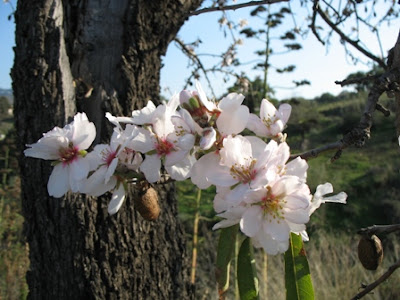
Dates aside, the Almonds are very beautiful when they are in bloom. Their blossoms are a light shade of pink that makes an interesting contrast with the dark brown, almost black bark color of the tree.
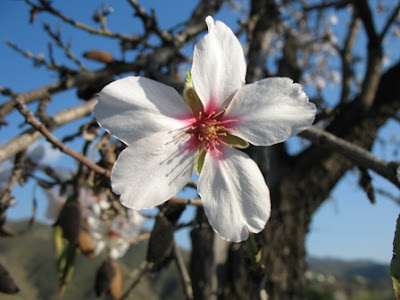
There are a lot of Almond trees around Malaga. A few days ago while driving back from Granada I saw whole hillsides of Almond trees in full color. Makes for a very attractive landscape.
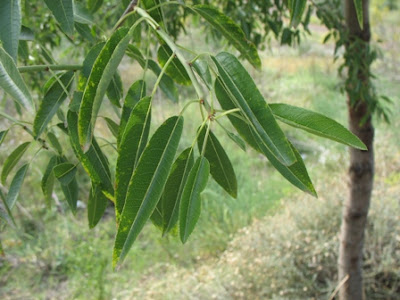
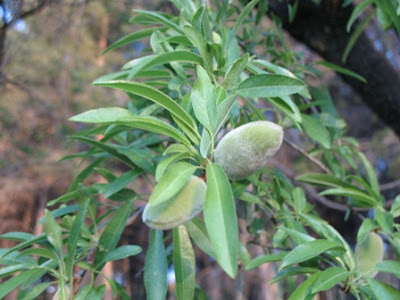
When the Almond fruit grows to maturity it becomes a green seed pod with soft, velvet like exterior. As it ripens this turns dark brown and eventually peels off revealing the hard shell of the Almond beneath.

 The Almond trees (Prunus dulcis) are in bloom in the hills above Malaga right now. Yesterday I talked to a man who grew up here and he said that this was the earliest that the Almonds have ever bloomed. I´m note sure when the Almonds have blossomed in the past but January 26th does seem rather early. I wonder if the fact that we have been having an unusually warm month has anything to do with it.
 Dates aside, the Almonds are very beautiful when they are in bloom. Their blossoms are a light shade of pink that makes an interesting contrast with the dark brown, almost black bark color of the tree.
 There are a lot of Almond trees around Malaga. A few days ago while driving back from Granada I saw whole hillsides of Almond trees in full color. Makes for a very attractive landscape.
 When the Almond fruit grows to maturity it becomes a green seed pod with soft, velvet like exterior. As it ripens this turns dark brown and eventually peels off revealing the hard shell of the Almond beneath.


